Categories
All Etiquette Articles

The Art of Pronoun Etiquette: Creating Inclusive Professional Spaces

The Art of Pronoun Etiquette: Creating Inclusive Professional Spaces

By Jacqueline Whitmore

In my decades as a business etiquette expert, I’ve observed how professional courtesy evolves to reflect our deepening understanding of human dignity and respect. Few changes have been as meaningful as our collective recognition of the importance of personal pronouns in professional settings. What was once considered optional has rightfully become an essential element of professional courtesy in the AI Era.


As with all etiquette, pronoun respect isn’t about rigid rules but rather about creating environments where everyone can bring their full professional capabilities to the table without unnecessary barriers. The most successful organizations have recognized that inclusion isn’t merely a matter of policy—it’s a practical business advantage that fosters innovation, attracts talent, and enhances team cohesion.


The question I frequently receive from professionals across industries is straightforward: “How do I navigate pronoun etiquette gracefully?” Let me offer practical guidance for today’s business environment.


Introducing Yourself with Pronouns


The simplest approach is often the most effective. When introducing yourself, incorporate your pronouns naturally:


In verbal introductions: “Hello, I’m Jacqueline Whitmore, she/her, founder of The Protocol School of Palm Beach.”


In email signatures: Include pronouns on the same line as your name or directly below it, using the same font style as your other contact information.


In virtual meetings: Most platforms now include pronoun fields in profile settings. I recommend utilizing this feature and including pronouns in your display name for larger meetings where not everyone may know you.


On business cards and social profiles: A subtle inclusion of pronouns has become standard professional practice.


Remember that the goal is normalization. When those in leadership positions consistently share their pronouns, it creates space for everyone to do so comfortably, without anyone feeling singled out.


7 Principles for Respectful Professional Interactions


1. Lead with Curiosity, Not Assumptions


Rather than making assumptions based on appearance or name, create habits that leave space for self-identification. When introducing others, if you’re uncertain about someone’s pronouns, simply use their name: “I’d like to introduce to you, Alex Keller, our new marketing director,” rather than “This is Alex. She’s our new marketing director.”


2. Practice Recovery With Grace


If you make a pronoun mistake—which happens to even the most mindful among us—correct yourself briefly and move forward. Avoid extensive apologies that center your discomfort rather than respecting the person’s identity.


3. Create Systems That Respect Choice


In your professional documentation, from meeting registrations to HR forms, ensure that pronoun sharing is invited but not required. Some professionals may be in different stages of identity disclosure in different contexts.


4. Normalize Pronoun Sharing in Group Settings


When facilitating introductions in meetings, model inclusive language: “I’d like to invite everyone to share your names, pronouns if you’re comfortable, and departments.” This approach makes space without demanding disclosure.


5. Update Your Professional Vocabulary


Review your communication for unnecessarily gendered language. Instead of “ladies and gentlemen” or “you guys,” consider “colleagues,” “everyone,” or “team.” These small adjustments create a more inclusive environment.


6. Respond to Misgendering With Diplomatic Correction


If you notice a colleague being misgendered, find an appropriate moment to offer correction. This might be in the moment with a gentle redirection, or privately after the fact. The key is addressing the issue while maintaining everyone’s dignity.


7. Approach Change With Patience and Persistence


Remember that building new habits takes time. Some colleagues may be learning these skills later in their careers. Approach education with patience while remaining firm about the importance of this professional courtesy.


The essence of all etiquette is creating environments where people can engage meaningfully without unnecessary discomfort or barriers. Pronoun etiquette is no different. When we extend this basic courtesy, we create professional spaces where everyone can focus on their contributions rather than on correcting misperceptions.

Jacqueline Whitmore, CSP, is a business etiquette expert, certified speaking professional, and founder of the Protocol School of Palm Beach in Palm Beach, Fla. She is the author of Poised for Success: Mastering the Four Qualities That Distinguish Outstanding Professionals and Business Class: Etiquette Essentials for Success at Work. For information on seminars or keynotes, visit https://etiquetteexpert.com/ or email info@etiquetteexpert.com.

Ask the Etiquette Expert

Categories
All Etiquette Articles

Hate Small Talk? Here’s How to Network Without Feeling Fake

Hate Small Talk? Here’s How to Network Without Feeling Fake

By Jacqueline Whitmore

Let me share something I hear almost weekly: “Jacqueline, I know networking is important, but I hate small talk. It feels so artificial or forced. I’d rather stay at home and not worry about schmoozing with my colleagues and coworkers.”


I completely understand this sentiment. After 26 years of coaching professionals, I’ve met countless talented individuals who view networking events with the same enthusiasm they’d reserve for a root canal.


The good news? This mindset is entirely changeable, and the shift can transform not just your career trajectory, but your entire approach to professional relationships.


Here’s the truth: networking isn’t about what others can do for you. It’s about genuine human connection, mutual support, and creating opportunities for everyone involved. When we reframe our thinking, these events become less about what we can get and more about what we can give, and that makes all the difference.


Why We Resist Networking (And Why That’s Normal)


First, your skepticism is completely natural. Many of us were raised to believe that self-promotion feels uncomfortable or even unseemly. We worry about appearing pushy, inauthentic, or opportunistic. Some of us are introverts who find large gatherings genuinely draining. Others have attended poorly organized events that felt more like cattle calls than meaningful gatherings.


But here’s what I’ve learned: when we approach networking with genuine curiosity about others rather than anxiety about ourselves, everything changes.


Instead of walking into a room thinking, “I hope I don’t say something stupid,” we can enter with the mindset of, “I’m looking forward to meeting some interesting people today.”


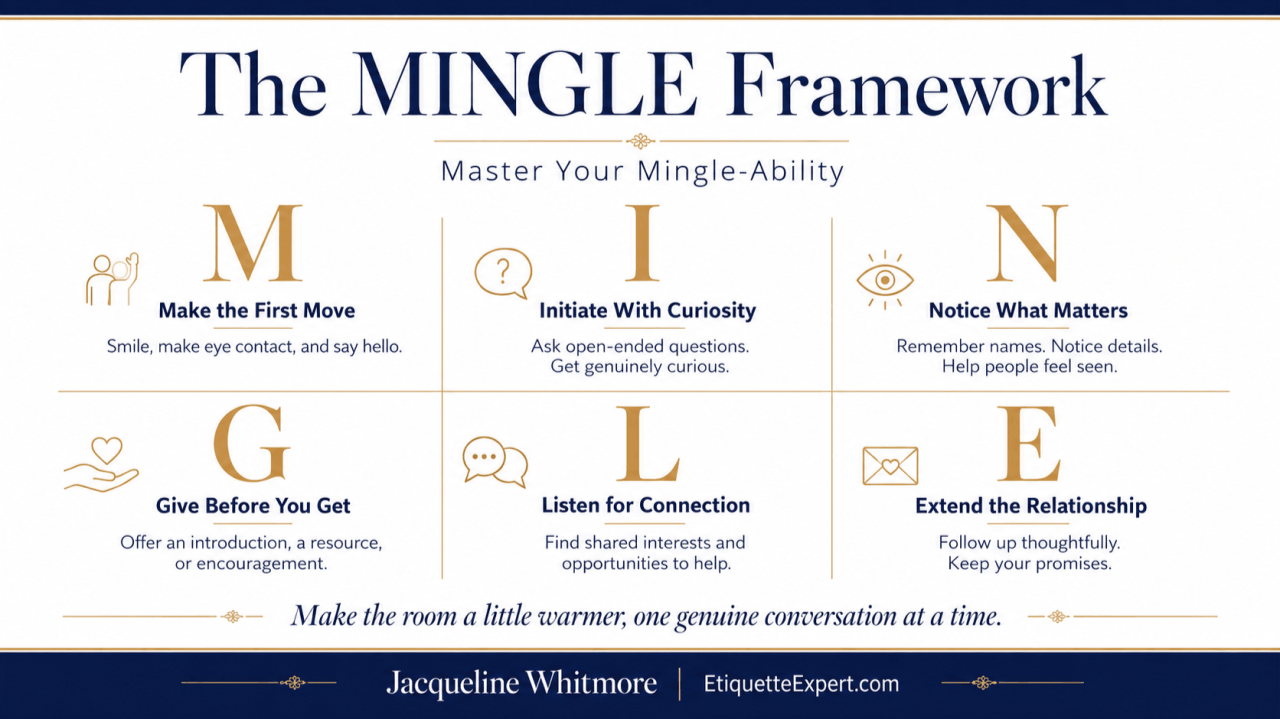
Seven Strategies to Transform Your Networking Experience


1. Redefine Success Before You Arrive


Stop measuring networking success by the number of hands you shake or business cards you collect. Instead, set a simple, achievable goal: have one meaningful conversation. Maybe you’ll learn something new about an industry trend, discover a fascinating hobby someone pursues, or simply make someone else feel heard and valued. That’s a win worth celebrating.


2. Become a Professional Connector

Shift your focus from “What can I get?” to “How can I help?” When you meet someone facing a challenge you can’t solve, think about who in your network might be able to assist. Introducing two people who could benefit from knowing each other positions you as a valuable connector and people remember those who add value to their lives.


3. Prepare Conversation Starters That Feel Natural


Instead of rehearsing your elevator pitch, prepare genuine questions that invite interesting responses. Try: “What’s the most exciting project you’re working on right now?” or “What trends are you seeing in your industry?” These questions shift attention to the other person while giving you fascinating insights into their world.


4. Set a Curiosity Intention


Before entering any networking event, remind yourself that every person you meet has a unique story, expertise, or perspective you’ve never encountered. Approach conversations like a friendly journalist and be genuinely curious about what makes others tick. This mindset transforms small talk into meaningful dialogue.


5. Plan Your Recovery Time


If you’re an introvert, don’t fight your nature, plan around it. Schedule downtime after networking events. Know that you might need to recharge, and that’s perfectly okay. Networking is not a numbers game.


6. Focus on Learning, Not Selling


Attend events with a student’s mindset rather than a salesperson’s agenda. What can you learn about industry developments, new approaches to common challenges, or innovative solutions others have discovered? When learning becomes your primary goal, the pressure to perform disappears.


7. Follow Up with Generosity


The real magic of networking happens after the event. Send a thoughtful follow-up message via LinkedIn or email that references your conversation and offers something valuable. You might think about sending a relevant article, a useful contact, or simply a genuine “thank you for sharing your insights.” This approach builds relationships rather than just expanding contact lists.


The Mindset That Changes Everything


Remember, the goal of networking isn’t to become someone you’re not, it’s to become the most authentic, generous version of yourself. When you focus on genuine connection over strategic positioning, networking stops feeling like work and starts feeling like the valuable relationship-building it’s meant to be.


Your next networking event isn’t a challenge to survive, it’s an opportunity to discover something new, help someone else, and maybe even surprise yourself with how naturally connection can unfold.


Jacqueline Whitmore is a Certified Speaking Professional (CSP) with 26 years of experience in executive presence, business etiquette, and international protocol. She is the author of Poised for Success: Mastering the Four Qualities That Distinguish Outstanding Professionals and Business Class: Etiquette Essentials for Success at Work. To schedule a workshop or keynote for your group, visit EtiquetteExpert.com or email info@etiquetteexpert.com.

Ask the Etiquette Expert

Categories
All Etiquette Articles

The Hula Hoop Method: Creating Your Circle of Positivity in a Challenging Workplace

The Hula Hoop Method: Creating Your Circle of Positivity in a Challenging Workplace

By Jacqueline Whitmore

In my decades of coaching professionals on etiquette and executive presence, I’ve observed that maintaining a positive mindset isn’t just about personal affirmations—it’s about skillfully managing the energy and attitudes that surround you daily. This is particularly true in today’s evolving workplace, where negativity and toxicity can spread rapidly through both physical and virtual environments.


One of the most powerful concepts I share with my clients is what I call the “Hula Hoop Method.” Picture yourself standing inside an invisible hula hoop that represents your circle of control. Within this circle lies everything you can directly influence: your reactions, your words, your focus, and your energy. Outside the hoop? The countless elements beyond your control, including other people’s attitudes, complaints, and negativity.


This visual framework becomes transformative when navigating professional relationships. It doesn’t mean building walls of indifference—rather, it helps you maintain compassionate boundaries that protect your positive mindset while allowing you to respond with grace.


As we move further into 2025, with workplaces continuing to blend virtual and in-person interactions, protecting your mental environment has become more crucial than ever.


Here are seven strategies for applying the Hula Hoop Method when facing workplace negativity:


1. Practice Mindful Engagement


When approached with complaints or gossip, pause before responding. This brief moment allows you to choose whether to step into that negative energy or redirect it. Whenever you’re around a difficult person, don’t be afraid to speak up and share a thoughtful response like, “That’s an interesting observation. I really can’t comment on that at this time.” Negativity breeds negativity so it’s best not to allow others to drag you into the trenches.


2. Create Energy Transitions


Develop personal rituals that help you reset your mindset after engaging with negative individuals. Whether it’s a moment of deep breathing, a brief walk, or even mentally visualizing yourself cleaning your energy field, these transitions prevent negativity from lingering in your mental space.


3. Deploy Strategic Empathy


Empathy doesn’t mean absorbing others’ negative emotions. Instead, practice what I call “strategic empathy”—understanding someone’s perspective without taking on their emotional state. Phrases like “I can’t imagine how frustrating this might be for you” acknowledge feelings without adopting them as your own.


4. Establish Communication Boundaries


In our perpetually connected workplaces, boundaries have never been more important. Clearly define when and how colleagues can approach you with concerns. For chronic complainers, consider scheduling specific check-ins rather than allowing constant interruptions that disrupt your focus and energy. Encourage your team to come up with possible solutions whenever they have a complaint or concern.


5. Cultivate Positivity Allies


Intentionally build relationships with colleagues who maintain positive, solution-oriented mindsets. These connections serve as emotional anchors during challenging times. In the coming years, as workplace dynamics continue evolving, these alliances will become increasingly valuable professional assets.


6. Redirect Through Questions


When faced with a negative spiral, use targeted questions to guide the conversation: “What would an ideal outcome look like?” or “What’s one small step we could take toward improvement?” This technique acknowledges the issue while maintaining your position within your circle of control.


7. Embrace Selective Disengagement


Sometimes, the most gracious response is creating distance. If a conversation is deteriorating into unproductive negativity, politely disengage: “I appreciate you sharing your concerns. I need some time to process your concern, so let’s set a date to connect at the end of the week to discuss potential solutions.” This “cooling-down period” maintains professional courtesy while protecting your mental environment.


By practicing the Hula Hoop method, you consciously define and protect your circle of control and preserve the energy and focus needed to bring your best self to each interaction.

Jacqueline Whitmore, CSP, is a business etiquette expert, certified speaking professional, and founder of the Protocol School of Palm Beach in Palm Beach, Fla. She is the author of Poised for Success: Mastering the Four Qualities That Distinguish Outstanding Professionals and Business Class: Etiquette Essentials for Success at Work. For information on seminars or keynotes, visit https://etiquetteexpert.com/ or email info@etiquetteexpert.com.

Ask the Etiquette Expert

Categories
All Inspiring Interviews

Why some employers are hiring etiquette coaches for Gen Z workers

An interview with Straight Arrow News

Why some employers are hiring etiquette coaches for Gen Z workers

Did you know…some Gen Z job candidates are showing up to interviews with their parents? Others are FaceTiming at their desks or asking for raises via text just weeks into a new role.


The good news is now many employers are hiring etiquette coaches to help the newest generation of workers meet workplace expectations and bridge growing generational divides.


In my recent interview with Straight Arrow News, I share what I’ve been observing when I work with the Gen Zs.


Here are some more staggering statistics:

A Resume Builder survey found that 58% of hiring managers who had interviewed Gen Z job candidates reported the applicant was not dressed appropriately.


The survey, which interviewed 782 U.S. hiring managers, also found:

  • 31% said they prefer not to hire Gen Z candidates.
  • 57% reported Gen Zers struggled with eye contact during interviews.
  • 19% said they heard inappropriate language from candidates.
  • 9% said a Gen Z applicant brought a parent to the interview.

Are Gen Z job candidates really that inept in people/social skills or are they just getting a bad rap?


Ask the Etiquette Expert

Categories
All Inspiring Interviews

Etiquette Expert Reveals Secrets​: Interview with Steve Siebold

An Interview with Steve Siebold

Etiquette Expert Reveals Secrets

Etiquette expert Jacqueline Whitmore, founder of the Protocol School of Palm Beach and author of the International best-seller, Business Class: Etiquette Essentials for Success at Work, reveals some of the most important lessons she teaches inside many the world’s largest corporations. If you’re an executive, entrepreneur, or anyone seeking uncommon success, watch this interview and study Jacqueline Whitmore’s books. When it comes to all things etiquette, she’s the best in class.


Ask the Etiquette Expert

Categories
All Etiquette Articles

How to Choose the Right Business Etiquette Speaker for Your Conference

How to Choose the Right Business Etiquette Speaker for Your Conference

By Jacqueline Whitmore

In today’s fast-paced and interconnected world, business etiquette plays a crucial role in creating successful and lasting professional relationships. Whether you’re planning a corporate event, a training session, or a conference, selecting the right business etiquette speaker can make all the difference in enhancing your team’s professional presence and personal brand. 


Here are some factors to consider when choosing a professional speaker to ensure your team gains the skills, confidence, and insights they need to thrive.


1. Expertise and Credentials


The first thing to consider is the speaker’s background, years of experience, and qualifications. Look for a professional with a certification and extensive experience in business etiquette, communication, and related fields. They should have a proven track record of working with businesses similar to yours and a deep understanding of the nuances involved in professional interactions. Check their credentials, certifications, media appearances, and any published works or contributions to their field.


2. Relevant Experience


It’s essential to choose a speaker with experience relevant to your industry and the specific topics you want to address. A speaker who has worked with a diverse range of industries can bring a wealth of knowledge and adaptable strategies to your team. Ask for references or testimonials from past clients to gauge their effectiveness and adaptability in different settings. A qualified business etiquette speaker may list these on their website or LinkedIn page. 


3. Engaging Presentation Style


An effective etiquette speaker is not only knowledgeable but also engaging and charismatic. The ability to capture and maintain an audience’s attention is crucial for successful learning outcomes. Look for a speaker who can present complex concepts in an accessible and entertaining manner. Consider watching video clips of their previous presentations to assess their delivery style and ability to engage an audience. A speaker who holds a Certified Speaking Professional (CSP) designation from the National Speakers Association is also a bonus. 


4. Customized Content


Every organization has unique needs and challenges. A top-notch business etiquette speaker should be able to tailor their content to align with your specific goals and objectives. Whether your focus is on improving networking skills, enhancing customer interactions, or refining professional presence, the speaker should offer customized solutions that address your team’s particular goals and pain points.


5. Practical Insights and Actionable Strategies


While theoretical knowledge is essential, practical application is key to lasting change. Look for a business etiquette speaker who provides actionable strategies and real-world examples that participants can immediately implement. The speaker should empower your team with practical tools and techniques that enhance their daily interactions and elevate your company or association’s professional image.


6. Credibility and Professionalism


The speaker you choose will be representing your organization or association, so it’s crucial they embody the professionalism and credibility you wish to project. Set up a virtual meeting to evaluate their professional demeanor, communication skills, and ability to connect with diverse audiences. A credible speaker should inspire confidence and respect, both on and off the stage.


7. Passion and Enthusiasm


Passion is contagious. A speaker who is genuinely enthusiastic about business etiquette will inspire and motivate your team to embrace new skills and perspectives. Look for someone who demonstrates a genuine commitment to helping others succeed and who is passionate about the impact of etiquette on personal and professional growth.


8. Cost Considerations


Finally, the cost of hiring a reputable business etiquette speaker can vary widely depending on their experience, reputation, and the scope of the engagement. Fees typically range from $2,500 to $10,000 for a keynote or workshop, but high-demand experts, bestselling authors, or those offering specialized programs can command higher fees. Consider your budget and the value that a seasoned expert can bring to your organization. Investing in a top-tier speaker may result in significant returns in terms of enhanced team performance and improved business relationships.


Choosing the right business etiquette speaker is an investment in your organization’s success. By focusing on expertise, relevant experience, engaging presentation style, customized content, practical insights, credibility, and passion, you can ensure a rewarding experience for your team. 

Jacqueline Whitmore is an internationally recognized etiquette expert, bestselling author, and founder of The Protocol School of Palm Beach. With over two decades of experience, she has worked with numerous Fortune 500 companies and has been featured in prominent media outlets including The New York Times, The Wall Street Journal, and USA Today. Jacqueline is the author of several books on business etiquette and is renowned for her engaging and practical approach to professional development. Her expertise helps individuals and organizations enhance their professional presence and build successful relationships in the global business arena. Visit her website at www.EtiquetteExpert.com

Ask the Etiquette Expert

Categories
All Inspiring Interviews

What manners do leaders need today both remotely and in the office?

IntHERrupt Podcast

What manners do leaders need today both remotely and in the office?

During the shutdown, you may have embraced your introverted nature and enjoyed not having to go to the office daily. It was nice not having to deal with people anymore during those two years. But have you noticed that your people skills have suffered?…

During the shutdown, you may have embraced your introverted nature and enjoyed not having to go to the office daily. It was nice not having to deal with people anymore during those two years.


But have you noticed that your people skills have suffered? Did you forget how to hold conversations with others? Do you even remember why it’s important to have manners?


In this episode of Int-HER-rupt Podcast, host Linda Yates speaks with Jacqueline Whitmore, an international etiquette expert and founder of the Protocol School of Palm Beach. With 25 years of experience in the field, Jacqueline shares her insights on the significance of manners and etiquette in today’s workplace. From listening and embracing differences to making meaningful connections, Jacqueline provides valuable tips for leaders both remotely and in person.


The Value of Manners and Etiquette

●     Jacqueline explains that manners and etiquette are not just about formalities like using the proper cutlery or having a firm handshake.

●     Manners represent how we treat others, while etiquette encompasses our knowledge and mindfulness.

●     These qualities go beyond technical skills and play a crucial role in helping individuals build their personal brand and character.

●     Jacqueline asserts that manners and etiquette are essential for getting hired and promoted in the workplace.


Etiquette in Remote Work

●     When it comes to remote work, Jacqueline emphasizes the importance of active listening.

●     It is a skill that helps leaders connect with their team members, whether in person or online.

●     Additionally, embracing differences and maintaining an open mind is crucial to fostering a positive work environment.

●     To enhance remote connections, Jacqueline suggests interacting with others on LinkedIn by commenting on their posts, adding value to their lives, and sending articles of interest.

●     She emphasizes the need to go beyond superficial engagements and focus on building meaningful relationships.


Etiquette in In-person Meetings

●     In face-to-face interactions, Jacqueline reiterates the significance of active listening.

●     Leaders who are great listeners outshine others and make a positive impact on their teams.

●     Humility and compassion are also vital traits for successful leaders, as they signal respect and care for employees and clients.

●     Jacqueline believes that true manners lie beneath the surface and go beyond simple gestures like eye contact and a firm handshake.


Jacqueline’s expertise sheds light on the timeless principles of manners and etiquette in the workplace. She emphasizes that being mindful of how we treat others can significantly impact both personal and professional success.


Whether in remote or in-person interactions, active listening, embracing differences, and making meaningful connections are key to fostering positive relationships. Incorporating these principles into our daily lives can enhance our personal brand, build character, and create a harmonious work environment.


“I believe that manners and etiquette are extremely important in the workplace because they not only help you get hired, they also can help you get promoted. And you and I both know that technical skills, just technical skills, account for a very small percentage of why you get a job and keep a job. However, your life skills or soft skills will get you promoted. Those soft skills are tied to your character.” – Jacqueline Whitmore

Ask the Etiquette Expert

Categories
All Inspiring Interviews

How To Ignite the Power of Women: Interview with Simon T. Bailey

An Interview with Simon T. Bailey

How To Ignite the Power of Women

Etiquette expert Jacqueline Whitmore interviews bestselling author and speaker, Simon T. Bailey. Learn the qualities women REALLY want in a man and how to have a better relationship with your spouse or partner. 


Ask the Etiquette Expert

Categories
All Inspiring Interviews

Jacqueline Whitmore: Etiquette Tips For Business + Life

An Interview by Michele Lamoureux

Jacqueline Whitmore: Etiquette Tips For Business + Life

Jacqueline Whitmore, International Etiquette expert is on to help us with etiquette tips for business and life. We discuss how to have navigate zoom meetings, how to engage in a meaningful way at the office to build rapport, and then she answers the audience questions relating to thank you notes, gifts, and what to say when someone you care about is diagnosed with a serious medical issue, or loses someone they love, including a pet.  I think in mid-life there are more of these scenarios and it is hard to know what to say or do to best support the person. Tune in now to hear Jacqueline’s advice.

The show notes and the freebie she mentioned are at thegoodlifecoach.com/221


We discuss:
  1. Office protocol including what to wear
  2. How to navigate zoom meetings
  3. Audience questions – including what to say/do when someone you care about is diagnosed with cancer or other illness or loses someone they love, including a pet.

Ask the Etiquette Expert

Categories
All Etiquette Videos

Start Your Own Etiquette Business

How to Become an Etiquette Expert and Start Your Own Etiquette Business

Etiquette Expert Jacqueline Whitmore shares valuable insights into becoming a business etiquette consultant and starting your own etiquette business.


During this masterclass, you’ll learn how to:
  • Determine which etiquette courses are most profitable
  • Garner media exposure and become a trusted expert in your community
  • Discover which social media outlets cater to your ideal clientele
  • Identify the most effective ways to make your website stand out from the competition
  • Price your programs appropriately and get paid for your time and experience
  • And much more!

Jacqueline is an author, etiquette expert, and the founder of The Protocol School of Palm Beach.

Ask the Etiquette Expert