I was at an event recently when I noticed a woman standing alone near the bar. She was holding a drink and looking around the room, seemingly uncertain about what to do next.
I couldn’t help but wonder what was going through her mind. Did she want to meet people but have no idea how to begin? Was she shy or introverted? Was she waiting for someone to approach her? Or was she simply thinking, “Now what?”
Many of us have experienced a moment like that. We walk into a room filled with unfamiliar faces and suddenly forget how to introduce ourselves, join a conversation, or make a graceful exit. We know networking is important, but knowing that doesn’t necessarily make it feel comfortable.
Why Networking Feels So Uncomfortable
According to a global LinkedIn survey, nearly 80% of professionals believe networking is important to career success. Yet 38% say they find it difficult to stay in touch with their network. The survey also found that more than one-third of professionals struggle with knowing what to say when reconnecting.
The discomfort isn’t always about shyness. For many people, networking can feel transactional, as if they are trying to sell themselves or get something from someone else. They may worry, “What if I sound self-serving?” “What if I look awkward?” or “How do I politely end a conversation without offending someone?”
Most of my clients tell me they aren’t actually afraid of networking. They’re afraid of the awkwardness that sometimes comes with it. What they need is a simple framework to help them know what to do next.
That’s where MINGLE comes in.
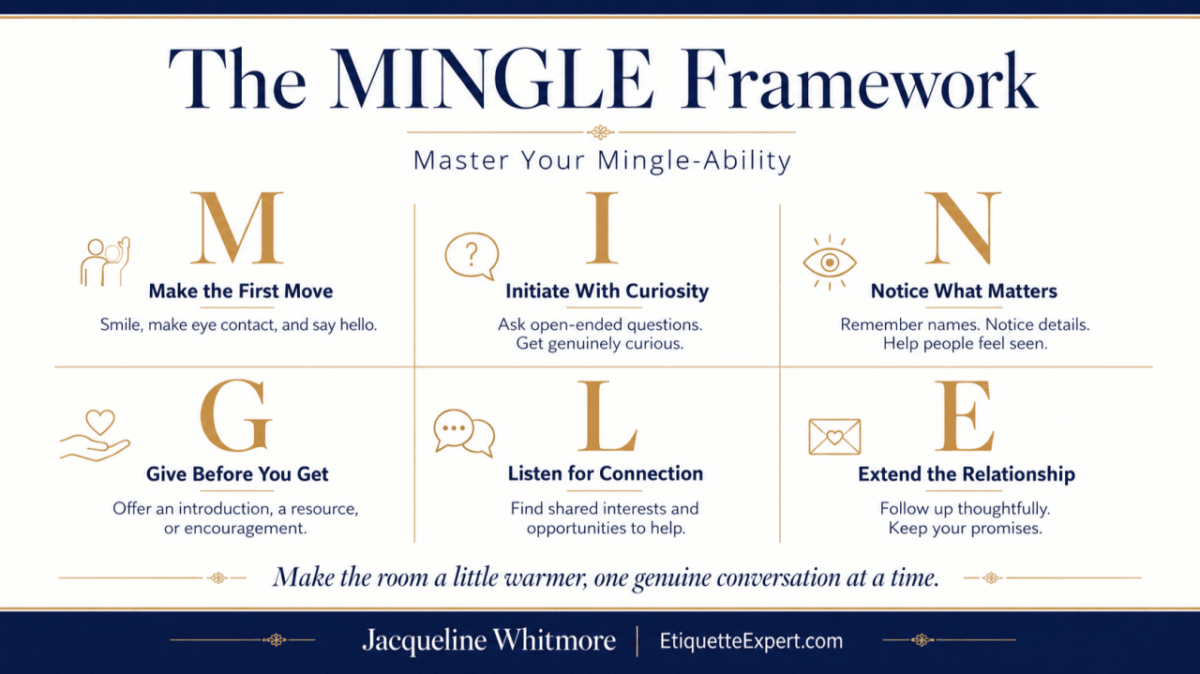
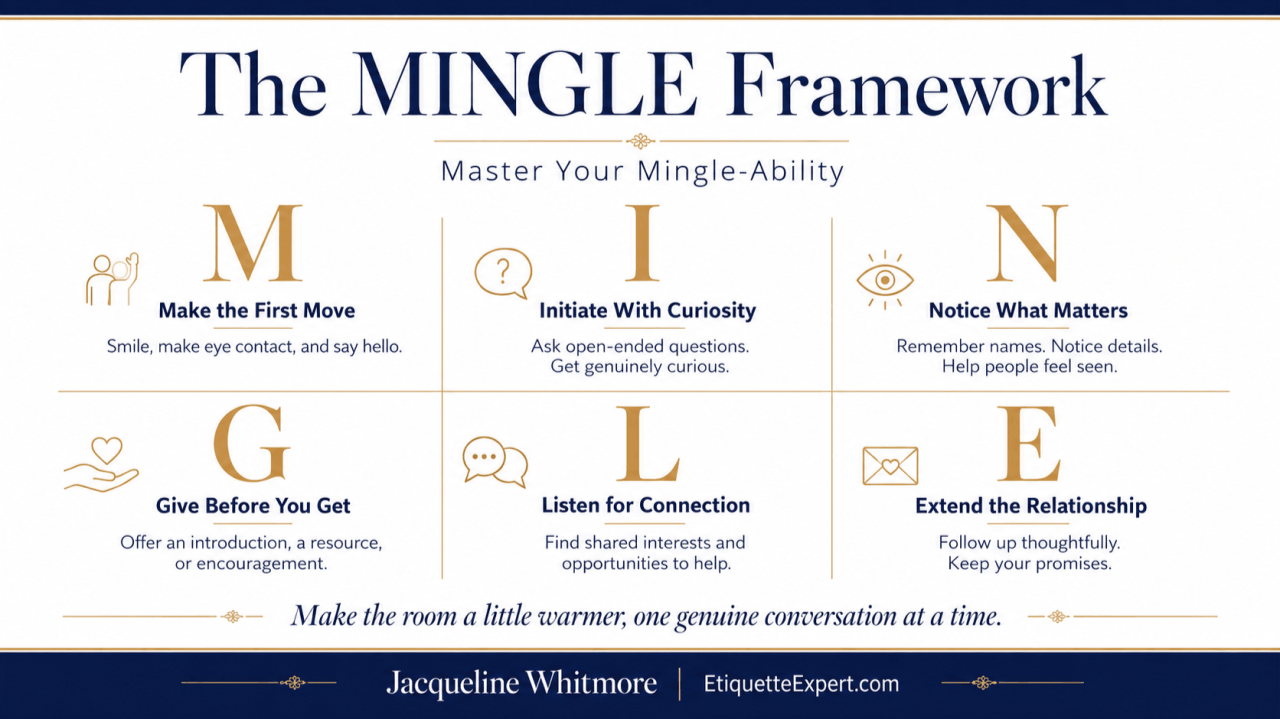
Introducing the MINGLE Framework
Your goal at a networking event isn’t to “work” the room. Your goal is to read the room. Look for possibilities, notice who might welcome a conversation, and make the room feel a little warmer, one genuine interaction at a time.
MINGLE is a simple, memorable framework that can help you do exactly that.
M: Make the First Move
Don’t wait for someone else to approach you. Take the initiative by smiling, making eye contact, and introducing yourself. You might say, “Hello, I’m Jacqueline. What brings you to the event?” It doesn’t have to be clever or complicated. It simply needs to open the door to conversation.
Confidence often begins with the willingness to say hello. You may feel anxious at first, but you take that first step anyway. That isn’t fearlessness. That’s courage.
I: Initiate With Curiosity
Instead of worrying about what to say or how impressive you need to sound, become curious about the other person. Ask open-ended questions that go beyond the predictable “What do you do?”
You might ask, “What brought you here tonight?” “What are you working on that excites you?” or “What do you enjoy doing when you’re not working?” Curiosity is magnetic because people enjoy talking with someone who shows a genuine interest in them.
N: Notice What Matters
Good networkers are good observers. They pay attention to names, body language, tone of voice, common interests, and the small details people share. They also notice when someone is standing alone and may appreciate being included.
When you remember a name or refer to something a person mentioned earlier, you send a powerful message: “I heard you. You matter.” Making someone feel seen is one of the strongest foundations for building a meaningful connection.
G: Give Before You Get
This is the game changer. Look for ways to be helpful before asking for anything in return. Make an introduction, share a useful resource, offer encouragement, or simply give someone your full attention.
Giving doesn’t have to involve a grand gesture. Sometimes the most valuable thing you can offer is your interest, your time, or your willingness to include someone who feels out of place. When you approach networking with a giving mindset, it stops feeling transactional and starts feeling authentic.
L: Listen for Connection
Listen for the threads that could lead somewhere meaningful. You may discover a shared interest, a mutual acquaintance, a business need, an upcoming project, or an opportunity to help.
Real networking isn’t about collecting as many business cards as possible or speaking with everyone in the room. It’s about discovering genuine points of connection and giving those connections room to grow.
E: Extend the Relationship
A conversation at an event is only the beginning. If you would like to stay in touch, take the next step. Connect on LinkedIn, send the article you mentioned, make the introduction you promised, or invite the person to continue the conversation over coffee.
Be specific and follow through promptly. A brief message such as, “It was a pleasure meeting you last night. I enjoyed our conversation about Italian cuisine, and here is the article I mentioned,” can help turn a pleasant encounter into a lasting professional relationship.
The Confidence That Comes From Structure
When you have a simple framework, you no longer have to stand by the bar wondering what to do next. You have a clear path to follow, from making the first move to extending the relationship. And with each step, networking begins to feel a little easier and more natural.
The secret isn’t to impress everyone in the room. It’s to spend less time worrying about how you’re coming across and more time helping other people feel comfortable, included, and valued. When you bring the best and most genuine version of yourself into the conversation, confidence and connection begin to emerge naturally.
So, the next time you walk into a room full of unfamiliar faces, remember to MINGLE. You never know where one warm hello might lead.